• Published on

    I need some beta readers...

    Image description
    So I've been busy launching my book Shadowed Promise,  doing interviews and posts and updating information.
    I also published a short-story in the lovely online journal induswomanwriting.com. Check it out!

    Now I've got time to focus on my new venture, another novel, called Fighting for Tara.
    I'm looking for volunteers who are willing to be my beta readers.

    What's a beta reader, you ask?

    ​A beta reader gets to take a look at the early drafts of a work in progress and help find issues with plot inconsistencies, typos, and give general input 

    What do you get in return?
    1. A FREE PDF copy of my book Shadowed Promise.
    2. A FREE PDF copy of the second book.
    3. If you are particularly helpful, you'll get a special mention in the acknowledgements.

    If you'd like to help, please leave me a comment with your email, or subscribe.
  • Published on

    guest author of the month:   renita d'silva

    Image description
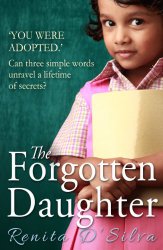
    Renita D'Silva is the Best-Selling author of The Forgotten Daughter.

    What got you into writing?

    I love stories and have always wanted to write. But it was only when my children started school that I had time to indulge my passion, do something about it. I enrolled in a creative writing course at the local adult education centre. My stories were liked by the other participants and our tutor urged me to send them off. Many of them got published, a few won competitions and appeared in anthologies and a couple were even nominated for awards. That gave me the confidence to try my hand at writing a full length novel. I haven’t looked back since.
     
    What do you like to write about?
    Families. The ever-changing, constantly evolving dynamics between family members, intrigue me. I am riveted by the secrets prevalent in families and this fascination has made its way into my books.
     
    What is your writing process? Tell us one unique or quirky habit you have when it comes to writing.
    I write when and where I can. I don’t have unique or quirky habits as such but I do drink copious amounts of tea.
     
    What was your inspiration for your latest book?
    I have always been intrigued by the relationship between sisters. There is love there and sibling rivalry too. What if something happened to test that bond, stretch it to breaking point? Would the sibling bond be strong enough to weather it? Would the relationship recover? These questions percolated in my mind. I imagined a woman picking up her phone and hearing her sister’s voice after a silence of twenty years. And it went from there.
     
     What is your goal for the next five years? Any new books in the pipeline, or any off-shoot projects from your current book?
    I have just finished the edits for my latest book. Fingers crossed – I hope my editor likes it. Goals for the future:  To write more books J
    What is your most important message to your readers?
    Thank you so much for choosing to read my books, for your reviews and messages and support. It means the world to me!
     
    What is your advice to aspiring writers?

    1. Finish your book and work and rework it until it is the best it can possibly be.
    2. Research your publisher/agent before sending your book off to them. Make sure they accept unsolicited submissions from writers in your genre. It will save you a lot of heartache.
    3. Don’t be disheartened by rejection. Easy to say, I know, but remember everybody gets rejected.
    4. Believe in yourself. There will always be people who’ll not like your writing but equally, there will be many others who will.
    5. Don’t give up. It only takes one person to say yes to publishing you and they might be the next person you send your work to.

    You can contact Renita at ​http://renitadsilva.com
    Her Amazon author page: Renita D'Silva.

  • Published on

                                Guest Author of the Month:                                                         Lilly Robbins Brock

    Image description
    In the next few months, I will post author interviews, both fiction and non-fiction.

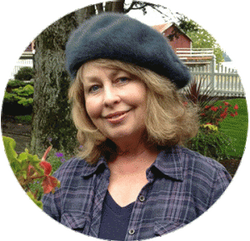
    Our first Guest Author on the Month is Lilly Robbins Brock.First of all, congratulations on your wonderful new book: Food Gift Recipes From Nature's Bounty: Easy & Delicious Recipes to Make and Share for Every Occasion.

    What got you into writing?
    I have been wanting to write ever since I was a little girl. While growing up, I wrote poetry and short stories. My mother had saved them and gave them to me years later. I chuckle as I look at them now. Upon adulthood, life happened. College, career, marriage and children. I started my interior design business in 1980, and it has been going strong up to the present. I did manage to fit in a monthly newsletter to my clients which they loved. Presently, I am retiring and looking forward to writing every minute that I can squeeze in.

    What is your genre?
    Historical fiction is my chosen genre. I have studied the genealogy of my family line, and love knowing how my ancestors lived. There are so many stories to be told. I'm addicted to history. Recently, however, I finished a nonfiction book--a recipe book with the theme of giving the gift of food originating from the bounty of food from our orchard and garden. I love preserving the food and going to my freezer or pantry shelves to hand pick a gift when the need arises. The whole idea inspired me to write a book and share my recipes and ideas. 

    What is your writing process?
    I always begin my writing project with research. Some writers research later and fill in, but for me, many times a piece of information will inspire a part of the story. I find it necessary to become intimate with the research so that it is "within" me when I write. I categorize my research into files according to subject matter. Having such a wealth of information on hand, assures me that I will always have some "gold" to keep me moving forward.

    From where do you draw your inspiration?
    Almost anything can trigger an idea or inspiration for a story. As mentioned earlier, history offers a plethora of ideas, stories and inspiration. It could also be something as simple as watching people, and I will challenge myself to try to guess about what their life story may be based on their actions and reactions to other people. Whether I'm correct or not, and of course most of the time I would never know, I have an idea for a story. One of my favorite things to do is to listen to our sometimes forgotten elderly citizens' comments and stories. With a little urging, they will tell me about their past.

    What is your goal for the next five years?
    My goal for the next few years is to continue writing for as long as I continue to enjoy it. My husband and I want to write one particular story that took place 350 years ago involving both of our ancestors who knew each other in a small town of 100. They were involved in a massacre. They fought together, died together and some survived together. Mine was a two year old boy. If he hadn't, I wouldn't be here today. My husband and I discovered this incident in history separately and we're sharing with each other while realizing it was the same story. So 350 years later, the families are reunited! Sitting in my desk drawer is a paranormal historical romance/tragedy waiting to be finished. There's plenty to write!

    What are your views about self- versus traditional publishing?
    I have only experienced self publishing. Years ago, when I knew I would eventually write, I started studying both methods. Self publishing was just emerging, but I knew it would take off--there are so many advantages. While there are some advantages to traditional publishing, I lean to self publishing for the simple reason that you are in more control of how and when you publish as well as the percentage of the royalty.

    What have you learnt from your experience?
    I have learned not to "go it" alone. Joining the writing groups on line has been extremely helpful, and the writers are all so supportive. I'm sure many will be lifetime friends. I have also joined a writes' group in the town near us. The interaction is wonderful, and the exchange of ideas and information is priceless.

    What is your most important message to your readers?
    What would we do without readers? As writers, we like to know if readers like what we are writing--so let us know. Blogs are a great way to become involved. For me, I would enjoy interacting with the reader while writing a particular story. Perhaps asking an opinion on a particular character or a book cover.

    What is your advice to aspiring writers?
    My advice to writers is to get all our ducks in a row ahead of time. Learn what they need to be. Stay persistent to write everyday even if it's just a paragraph. I use a trick of not finishing a sentence at the end of a paragraph so that I can easily pick up where I left off without having to come up with a new paragraph with my brain not being warmed up yet. As I mentioned before, don't "go it" alone. You do not want to be an island unto yourself.
     Don't give up on your desire to write even if life is happening as it did for me. I knew that the "someday" would come. If you can't start right away, keep educating yourself as the time goes by. Time passes no matter what you do, you might as well have some knowledge stacked up to be ready to go. Keep a journal of happenings. Keep a notebook to write down little snippets of events that you witness. One day you will have a stockpile waiting for you. Much better than a blank mind and computer screen, right? One more thing, write because you want to write without dollar signs in your head. Making a lot of money is a long road ahead. I'm still on that road.

    Lilly Brock can be reached at www.lillyrobbinsbrock.com
    Get Lilly's book here: Food-Gift-Recipes-Natures-Bounty
  • Published on

    Traditional Versus Self-Publishing

    Image description

    ​​Traditional publishers prefer to print a thousand copies of a book written by an established author rather than 100 copies of books written by ten new authors. It makes financial sense to bet on a winning horse.
    Changes in the publishing landscape have allowed new authors to shun traditional publishing altogether and dive straight into self-publishing via Amazon or other avenues.
    The problem is of quality. Traditional publishing houses are meticulous about the plot, the structure, character arc, dialogue, copy-editing, and cover design, and often have a budget for advertising.
    For a new author who is considering self-publishing, there are myriad resources to get professional help from content to copy editing, cover design to formatting and advertising. When working on a small budget with the likelihood of a bestseller remote at best, new authors find it difficult to get it all done professionally and still come ahead.
    We’ve all heard of best-selling self-published authors making six figure profits and procuring book and movie deals. But for most authors, it’s a pipe dream.
    But new authors should be hopeful. Think of your first book as a business venture. No business makes profits on day one. It takes an initial capital investment, advertising, and discounts to attract future paying customers (fan base) before a business can take off.
    For fiction authors, I’m told it begins to take off only after the first few books are ready to go. So rather than wait a year between books, it’s better to write and polish up two or three, and publish them within a few months of each other. Give one out for free, or give discount packages.
    Once the word it out there, with 20 or more 5 star reviews, there’s a chance it is discovered.
    For those of us writing for the fun of it, self-publishing is a great option. I’m considering it for my next novel Shadowed Promise.
    Would you consider self-publishing?
    Picture
  • Published on

    Writing tips from Harvard's linguist Steven Pinker

    Image description
    ​I’m sharing a recent article by Eric Barker in Time Magazine about Writing Tips from Harvards’ Cognitive Scientist and Linguist Steven Pinker:

     In short:

    1. Use easy words. Don't try to outsmart your reader.
    2. Assume the reader doesn’t know your world, so use descriptive words.
    3. Don’t beat about the bush. Be direct.
    4. Stick to the format of your genre and the rules of grammar most of the time. It will make your exceptions exceptional.
    5. Read a lot in your genre.
    6. Revise until you eliminate every unnecessary word, then revise some more.


    To read the full article, click the link below:
    http://time.com/3584611/write-better-tips-from-harvard/?xid=time_socialflow_facebook
  • Published on

    Reading between the lines

    ​​
    Image description
    ​​At my daughter’s back to school night, her history teacher told us how he expects the students to interpret documents using text, context, and subtext. Fiction authors intuitively use the three tools to enrich their writing.

           Text simply means what the author has written.
           Context is the situational/cultural/social/political relevance. In other words, the “who, where, what, when, why.”
           Subtext is the hidden or implied meaning.

           Let’s take the following scenario:

           A man is at a high school reunion, where he meets his high school sweetheart whom he hasn’t seen in ten years. The attraction is mutual, and they rekindle their romance. But before temptation is too strong, he remembers his wife, who is alone at home, taking care of their newborn baby. He leaves the reunion early, drives back home, and opens the door. Looking at his haggard wife rocking the baby, his eyes tear up. His voice shakes as he says, “Honey, I’m back.”
           Let’s examine the words: “Honey, I’m back.”
           Text: The man is back home.
           Context: He was away at a reunion, but he felt guilty about leaving his wife to take care of the newborn, and cut his trip short.
           Subtext: He nearly succumbed to temptation, but rose above it. He decided to return to his wife, and to his roots. He doesn’t have to say anything more, but the reader knows what he means. He is ‘back’ from his moral ‘excursion’.

           Let’s look at the following example:

           A couple is at a restaurant, ordering food. The husband has put on several pounds over the past few years. He orders a steak, a side of fries and mashed potatoes. The wife, who is not generally a health freak, says, “I’ll have a salad. I’m watching my weight.”

           
    What’s the subtext?
    ​​
    ​​