• Published on

    The Girl with the Limp by Sunanda Chatterjee

    This short story was published in www.induswomanwriting.com...
     
                Leaving the office with my briefcase and portfolio, I got into my old Nissan and drove toward the estates in Pasadena. The appointment was at 9:30 AM.
    I drove through the hills beyond Rose Bowl, overlooking the country club, where all the ‘old money’ lived. My boss Mr. Chen, the owner of Yin & Yang Designs had told me our new clients were Indian, and preferred an Indian designer for decorating their new home. The lady spoke no English.
    “Better not mess this one up,” Mr. Chen had said.
    I wish he had told me about the meeting yesterday so I could have dressed in an Indian outfit to better impress the client. I looked at my beige blouse and black skirt in dismay. I’d neglected to wear pantyhose for it was forecasted to be a hot day, and hoped the clients wouldn’t be too traditional.
    Mr. Chen had hired me just for providing service to the occasional Indian client in a Chinese-American dominated neighborhood of San Gabriel Valley, but I had the least experience on field. I’d worked on the projects with other designers, but was yet to get a client on my own.
    My career depended on this meeting…
                Parking my car a block from the estate, I picked up my portfolio filled with designs and ideas for ‘Ethnically Oriented Interior Decorations’ that Yin & Yang boasted, and walked up the winding driveway.
    An English butler opened the door and told me to wait in the morning room. The ‘mistress’ was a little late.
    I looked at the beautiful home, bereft of professional decorating, but elegant nonetheless. The family room and formal living rooms still had a few unopened cardboard boxes. A spiral staircase led to an upper level, and from the room I was to wait in, I could see the hallway, in which stood an impressive oak table cluttered with old photographs, with an empty box beside it.
    Unable to resist, I walked to the table and started looking at the black-and-white pictures, my professional mind already dreaming up beautiful oxidized silver frames which would show off their pristine beauty.
    My eyes went to framed newspaper clipping dated seven years ago, about a rags-to-riches story of an entrepreneur who had made it big with his Indian pre-cooked frozen foods. The frozen food packets, initially launched for paying-guests and hostel-dwellers in Mumbai were now being exported to the United States.
    I was familiar with the name “H & S Foods, Enjoy Home Cooked Meals Without Cooking at Home,” having sustained myself on those for nearly a year. H & S stood for Heat and Serve, the article informed me.
    I placed the newspaper clipping back on the table.
    Then I saw an old and yellowing photo of a family I knew a long time ago. Surely it wasn’t them? Yes, the old man, the frail woman, and the two girls.
    The older girl with the plain face, and the little one with the limp.

    To read the rest, click below:

    http://www.induswomanwriting.com/the-girl-with-the-limp.html

  • Published on

    Language that creates atmosphere

    Image description

    When describing a scene, it is important for the author to show what the character sees and feels. You can use all senses: sight, smell, touch, sounds, and taste. The shortest sentence can give a ‘vibe’ of a place, and create a sense of doom, hope, or sorrow.

    Examples:
    1. Storm clouds loomed in the horizon, as Nancy trudged uphill to the stone castle, pulling her coat tighter with trembling hands. The iron gates creaked open. She ran down the mossy cobblestone pathway to the double doors. Two stories above, a curtain swished in the breeze. Had someone seen her?
    2. A mockingbird trilled outside, and the fragrance of orange blossoms wafted in from the window. Dust motes danced in the sunbeam from the dawn of a new day. Nancy hummed as she opened the window to a crimson sunrise over the misty pines.  
    3. Moonlight filtered in from the window blinds. John stared at the empty pillow beside him and imagined her profile in the bunched up blanket. He touched the cool pillowcase, yearning for her warmth one more time as crickets chirruped outside. She was in a better place. Life would go on. He just had to find a way. 

    ​What do the above scenes portray?

    ​​
  • Published on

    Thrilling ride!

    Image description
    5/5
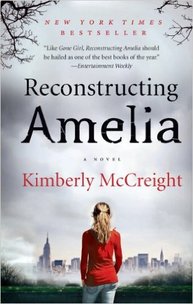
    I read this book during a long flight, and couldn't put it down. I loved the way Kimberly McCreight describes the angst of a grieving mother, and her grit as she finds out more and more truths about her daughter's secret life. Having a teenaged daughter myself, the book spoke to me. It is so important in thie day and age to keep in touch with your kids. Keep the conversations going. What's going on in their lives. How are they coping with the stresses of school. What's their social life. All these are addressed in Reconstructing Amelia.
    ​​Highly recommended.
  • Published on

    Image description

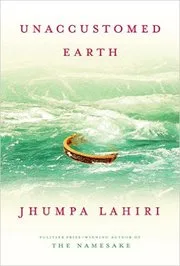
    ​Jhumpa Lahiri's lilting prose paints a pretty picture, but the melancholy can get to you. Many of her characters are maladjusted, sad, Bengali immigrants, not even trying to fit in, and their children are often confused and sadder still. But she writes beautifully! In this book, she explores the lives to two second-generation Indian immigrants as they weave their way through life in America, then Europe and Thailand. Interesting read!
  • Published on

    Author of the Month: Shoumi Sen

    Image description

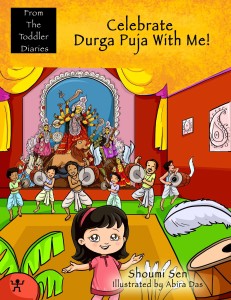
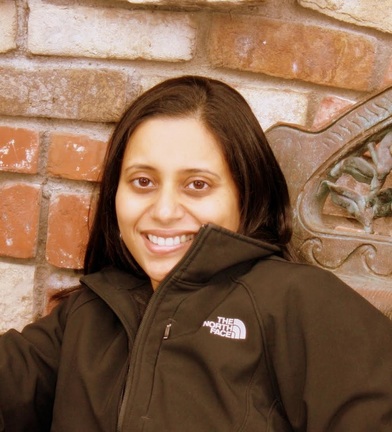
    Shoumi Sen is the Author of Celebrate Durga Puja With Me!, a children's picture book in a series about Indian festivals.

    Transcript from the interview:

    Welcome, Shoumi, and congratulations on your wonderful new book. 

    First of all, let me ask you: what got you into writing?


    Celebrate Durga Puja With Me! started as a thought while we were vacationing in Australia. It was right around the time of Durga Puja and we were in Brisbane, visiting an old friend who I grew up with in Mumbai. We were thrilled to find that the local Bengali Association would be celebrating Durga Puja and as we enjoyed the festivities of the “weekend Pujo” (in many celebrations outside India, five days of celebrations are often compressed to the weekend, and instead of multiple pandals throughout the city, the festivities are normally confined to a school auditorium), we reminisced about our childhood when the whole city would come alive! I realized that as long as we lived outside India, my little daughter may never get to experience Indian festivals the way I did growing up. I wanted to recreate the magic of this festival for her in verse and she absolutely loved what I wrote! Encouraged by her enthusiasm in this “toddler diary”, I decided to publish it.

    Did you start writing as your main profession or a hobby?

    I studied engineering, currently work as a Strategy, Sales and Marketing professional; writing is something I enjoy on the side. 

    What do you like to write about?

    I enjoy writing about Indian culture - my books are illustrated books centered around Indian festivals as experienced by a toddler. 

    What is your writing process? Tell us one unique or quirky habit you have when it comes to writing.

    I enjoy the research phase (that's the engineer in me talking) and then it's write, re-write and write some more. In my mind, I dream up images of what I want the illustrations to look like and I start writing detailed descriptions for my illustrator. My daughter and husband are my biggest fans and toughest critics so they play a huge role in bringing the final version to life! 
    I'm old fashioned, in that I write using pen and paper, so it's a lot of writing, scratching out, and re-writing until the poem sounds perfect. Also, I enjoy writing at night, when everyone is asleep!  

    What is your goal for the next five years? Any new books in the pipeline, or any off-shoot projects from your current book?

    I am currently working on the next few books in the series  'From The Toddler Diaries' and I'm looking forward to releasing the next diary soon!

    What is your advice to aspiring writers?
    Start writing and don't let "What next?" worry you too much. No matter what publishing route you take, enjoy the learning phase, as challenging (and sometimes frustrating) as it might seem. Network with other writers so you can help and support each other. For me, this has been quite a journey and I ended up making some amazing friends along the way! 

    What is your most important message to your readers?

    Thank you for your support and encouragement - it really means a lot to me! I would love to hear from you, please feel free to drop me a line at https://www.facebook.com/FromTheToddlerDiaries/ 

    Thanks for your time, and good luck with your next book!

    You can reach Shoumi Sen and read about her wonderful books at: www.shoumisen.com
    Amazon Book link: http://amzn.com/1517550076
    Amazon -  Author page: amazon.com/author/shoumisen
    Facebook - https://www.facebook.com/FromTheToddlerDiaries
    Picture
  • Published on

    Fiction-Writing Tips: Avoid Head Hopping

    Image description
    In fiction writing, a crucial element is deciding the POV (point of view) to narrate the story.

    It could be first person, which makes it easy to create a voice, but hard to explain what happens to other people not in direct view of the protagonist. An example is Hunger Games by Suzanne Collins.

    Third person limited is when the author uses only one person’s POV. Like first person, the limitation is that you can’t explain what happens to other people in the plot. An example is Harry Potter series by JK Rowling.

    Third person omniscient is when the author tells the story from different perspectives, like a movie camera showing wide vistas and zooming in on someone, then zooming out and focusing on someone else. It gives great flexibility to show what’s happening in places away from the protagonist. The reader often knows something the protagonist doesn’t, which creates another level of tension.

    Whatever POV you decide to use, it should be consistent. The reader needs to know whose ‘head’ he/she is in. The reader needs to feel the emotions of the character.

    If you’re using the third person omniscient, an important thing is to avoid ‘head-hopping’. Head hopping is when the POV switches from one person to another too quickly. The author should keep the POV of one person for the whole section or chapter, and switching to the other person’s POV in the next section.

    Here’s an example of ‘head-hopping’:

    Alice stared into Todd’s eyes and knew he was the one. As he tipped up her chin, her heart raced and her skin burned for his touch. She felt herself melt in his arms as he pressed his mouth against hers. Her fragrance drove him crazy, her lips felt soft against his. He knew he should never have left her. She was the only one he’d ever loved. She shivered as he whispered, “I love you!”

    In the above passage, the POV jumps from Alice’s perspective to Todd’s, in a muddled fashion.

    Here’s a better version, with consistent POV (Alice):

    Alice stared into his eyes and knew he was the one. As he tipped up her chin, her heart raced and her skin burned for his touch. She felt herself melt in his arms as he pressed his mouth against hers. Why did you leave me, Todd? But then he whispered, “I love you!”

    OR, Consistent POV (Todd):

    Todd tipped up her chin and stared into her eyes. He pressed his mouth against hers, and felt her melt in his arms. Her fragrance drove him crazy, her lips felt soft against his. He knew he should never have left her. She was the only one he’d ever loved. He felt her shiver as he whispered, “I love you!”

    I like to write passages from different POVs, until I decide whose perspective works best in a situation. In my latest novel Shadowed Promise, I wrote the last chapter three times, from three different perspectives until I decided on doing it through the protagonist Moyna’s eyes.